Showing posts with label psychology. Show all posts

Tuesday, February 25, 2025

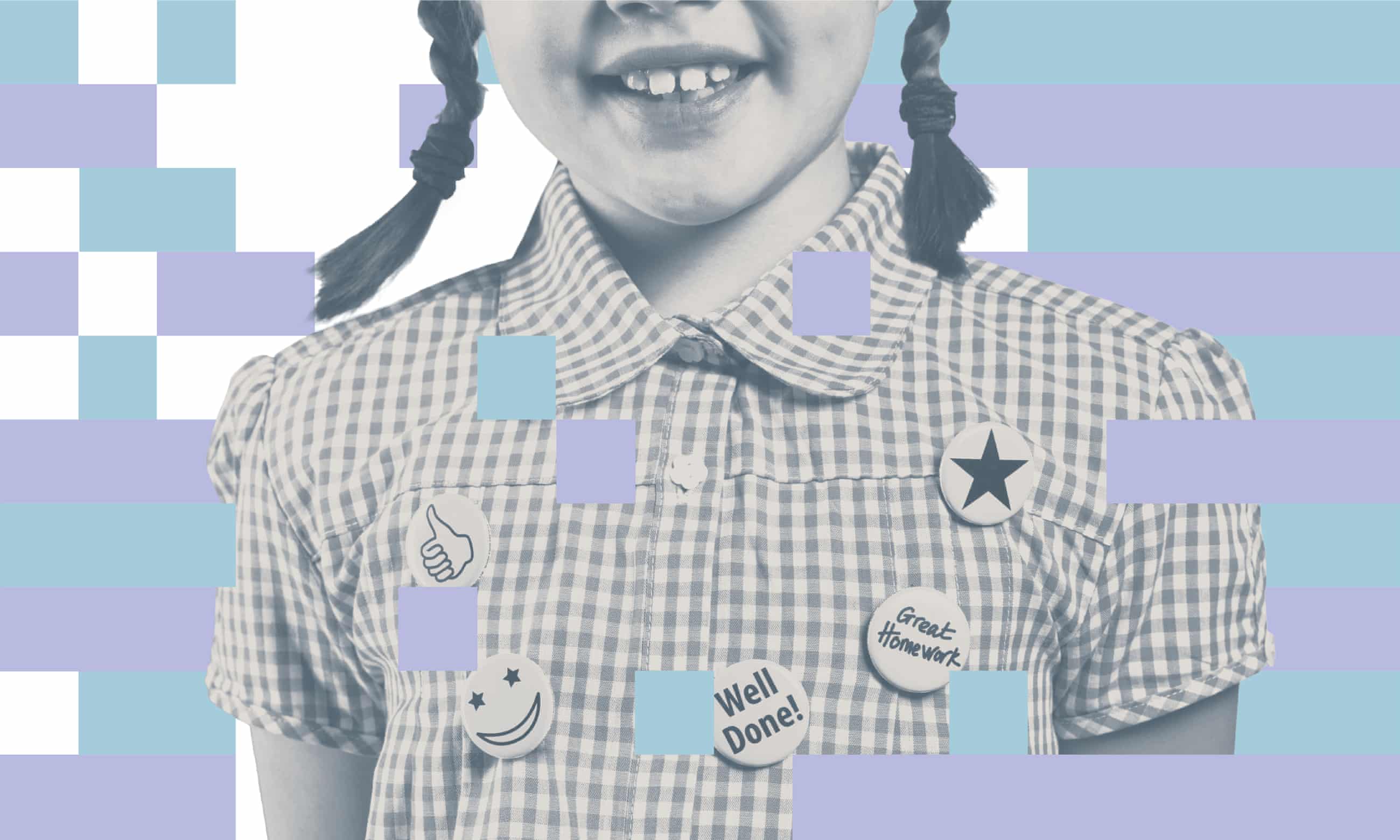
Why we should stop wishing we were special.

Guardian Design; Peter Dazeley


This wish might be lurking under the making and breaking of your relationships, as you seek the person who will make you feel special, and reject the ones who don’t. It might hide in the extra hours you spend in the office to get something “just right” for your boss, rather than settling for good enough. 
It might ring out with the alarm that wakes you far too early to train for a marathon, or to perfect a yoga pose. 
Trying to be special, to live a special life, can in reality take you further and further away from a better one. 
 By Moya Sarner, continue reading.

Share/Save/Bookmark

Wednesday, August 14, 2024

Couples having a row should take a five-second break to stop them reaching boiling point.

Taking a pause during an argument can act as a firebreak that prevents rows from escalating, defuses disagreements and could save the need for costly counselling. Psychologists at the University of St Andrews conducted experiments with 81 couples and published their findings in the Nature journal. 


  Share/Save/Bookmark

Saturday, January 13, 2024

Why couples fall out of love


Popular culture tends to focus on the image of the middle-aged man seeking the ego gratification of a younger woman as a fundamental cause of marital breakdown. 
And while there’s no denying that particular phenomenon, it might be that the less conspicuous issue of gradual female disappointment with men is a more common cause of marriages coming to an end. 

  Share/Save/Bookmark

Tuesday, December 26, 2023

Solastalgia


More precisely, solastalgia is taken from the Latin word solacium, meaning comfort, and the Greek root -algia, referring to grief, pain, or suffering. It is the existential distress one experiences when they encounter environmental changes.
 Particularly, it's the feeling some people get when they miss what it felt like to celebrate the holidays before. The feeling of solastalgia is typically associated with climate change, and how the changing weather patterns affect the way people have grown to live during the winter season.
 Many people have ingrained traditions or lifestyles connected to winter and the holidays, but that has slowly changed due to the rising temperature, and extreme shifts in the weather. 

  Share/Save/Bookmark

Monday, December 18, 2023

Why Women Suffer More Holiday Stress


It doesn't take much imagination to understand why women suffer more from 'holiday stress.' 
 Despite the progress women have made in the paid workforce, they still carry the bulk of domestic duties, including the tasks of merry-making.
 Of course there is no quick fix to change the well-entrenched gender norms and expectations. Nor will a few brandy eggnogs permanently alleviate anxiety. 
However, given stress is ultimately created by the way we process and interact with our environment, a few simple shifts in mindset can help to keep stress from hihjacking your holiday spirit.

  Share/Save/Bookmark

Friday, June 23, 2023

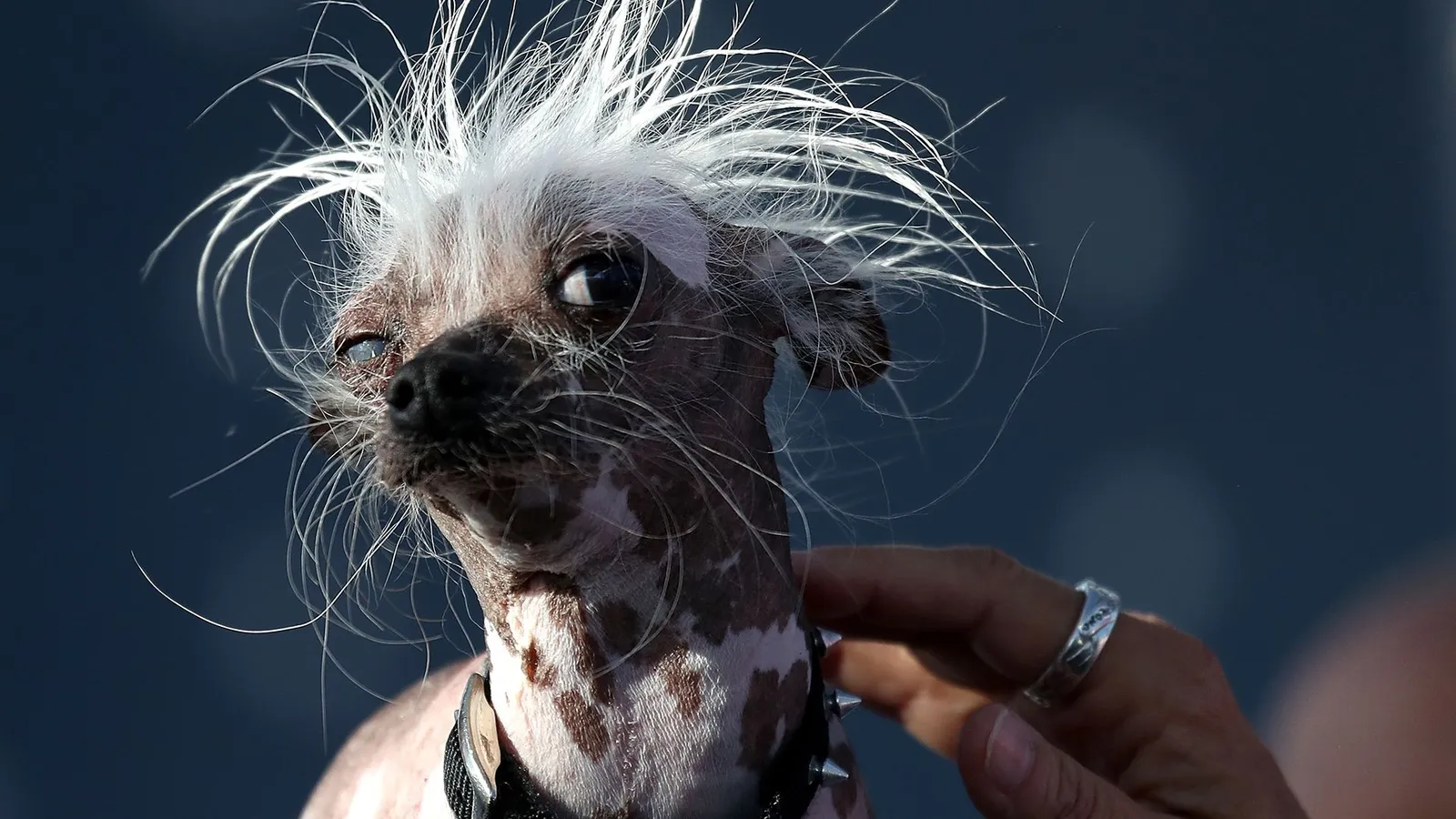
Why do we love ugly animals?


Evolution plays a role. According to Austrian zoologist Konrad Lorenz, human attraction to infantile features, such as big eyes, large heads and soft bodies, is an evolutionary adaptation that helps ensure that adults care for their offspring, guaranteeing the survival of their species.
 These infantile features were coined "baby schema" by Lorenz in 1943. 
 Weird-looking animals such as blobfish, pugs, aye-ayes and bulldogs all share these infantile qualities that trigger an affectionate response among humans and an innate instinct to nurture and protect. 
 
Share/Save/Bookmark

Tuesday, June 20, 2023

How the 'end of history' illusion shapes your life choices, David Robson


When you reflect on your life story, you can probably identify a series of transformations that made you the person you are today. You might have been shy as a child but found greater confidence in the workplace, or perhaps you were a wild child who eventually found inner peace. Many people describe this as a personal journey.
 If you now look to the future, I'm sure you can picture some important landmark events, but you may be hard-pressed to imagine further transformation in your core characteristics. It is as if your sense of self has reached its final destination, and you assume you'll keep the same traits, values and interests that you have today. "Although we recognise that we've evolved from who we once were to who we are now, we fail to see that we will continue to change in the future," notes the psychologist Hal Hershfield at the University of California, Los Angeles in his new book Your Future Self.
 This bias is known as the "end-of-history illusion" and it can have many unfortunate consequences for our personal and professional lives.
 
Share/Save/Bookmark

Monday, May 29, 2023

Why we sometimes feel invisible others


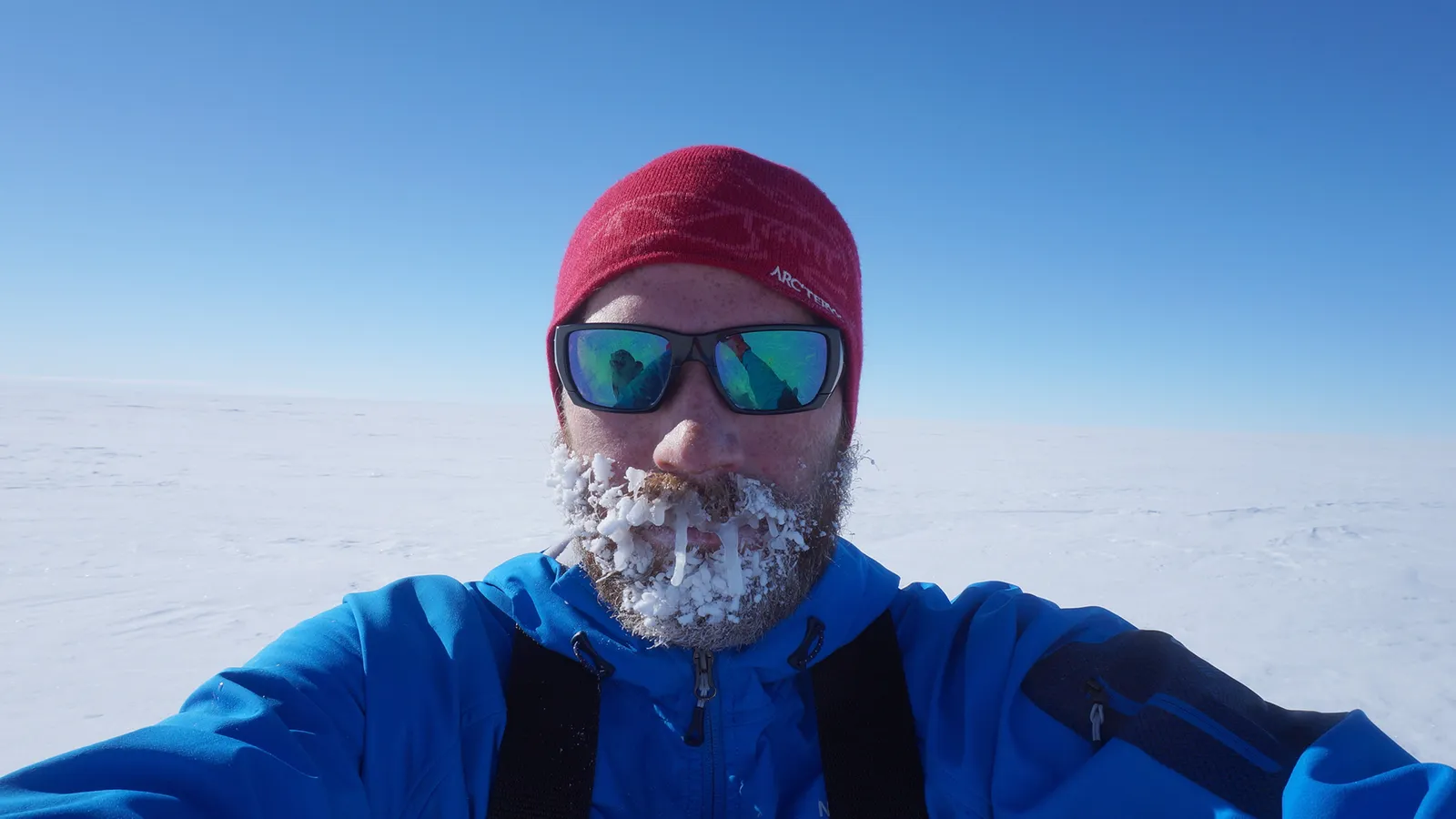
As Luke Robertson slogged further into his solo South Pole trek, he had more episodes of "felt presence". 

 Ben Alderson-Day, an associate professor of psychology at Durham University in the UK, is the author of a new book called Presence: The Strange Science and True Stories of the Unseen Other.
 He has found that these experiences are not limited to people in extreme situations. You may well have had the sense yourself at some point that someone is right there in the room with you, even though you can't see them. It's not uncommon after a bereavement or in people who have psychosis. 
As many as a quarter of those with Parkinson's report experiencing it. It can also happen when you're on the cusp of waking or falling asleep. For some the experience can occur as part of sleep paralysis, where you wake up, but can't move. 
People can have the strong sense that someone is in the room with them, or even sitting on their chest, pinning them down. Alderson-Day has found that half the time these experiences involving sleep paralysis involve a very frightening presence. A felt presence feels as though it's there with you in your personal space. It's hard to pin down exactly what a felt presence consists of. It's not experienced via the five physical senses of touch, sight, hearing, smell or taste, so it's not an hallucination. Objectively, in reality, there is nothing there at all. Yet they're not quite delusions either, which involve thoughts. Nor is it the same as imagining someone is there. 
People sometimes talk of something as nebulous as "a thickness in the air". It's almost like a sixth sense, which feels very real at the time. As Alderson-Day puts it: "It's too empty to be a hallucination, but too tangible to be a delusion." In his search for explanations, Alderson-Day turns to a combination of the physical and the psychological. With mountaineers and explorers, a lack of oxygen to the brain may play a part, something which is also known to induce hallucinations.
 But there's also the survival aspect. Is the mind somehow conjuring up a presence that helps us through? 
  Share/Save/Bookmark

Monday, May 22, 2023

Why people reward innate talent over hard work

Thomas Edison may be the most often quoted, with his claim that “genius is one percent inspiration and ninety-nine percent perspiration”, but many other variations exist. Just consider Octavia Butler’s advice for new writers. “Forget talent. If you have it, fine. Use it. If you don’t have it, it doesn’t matter. As habit is more dependable than inspiration, continued learning is more dependable than talent.” The Portuguese footballer Cristiano Ronaldo also emphasises the blood, sweat and tears that went into his training. “Talent without work is nothing,” he said, when asked about the secrets of his success on the pitch. 
 Such narratives may be beneficial for celebrated figures who wish to appear humble and grounded.
 But recent psychological research shows overemphasising the importance of hard work could backfire in many professional situations – thanks to a phenomenon known as the “naturalness bias”. 
These studies suggest people have greater respect for those with an innate gift than for those who have had to strive for their success. 

  Share/Save/Bookmark

Wednesday, April 12, 2023

What dining in the dark does to your tastebuds


Dark restaurants like the Blind Cow offer a tantalising novelty – a meal eaten in complete darkness, in this case served by waitstaff who are blind or have limited vision. For them, darkness poses no obstacle.
 In the black of the dining rooms, they move easily and surely, while the sighted remain rooted to their chairs, unable to navigate.
Though there are now a smattering of such places around the globe, the Blind Cow was the first permanent instantiation, founded in 1999 by a blind clergyman. 
So, how eating in darkness feels different for someone with sight? In the absence of vision, do the other senses grow sharper? Do you eat less when you have no idea what you're eating? 

  Share/Save/Bookmark

Sunday, April 2, 2023

Could you be a Highly Sensitive Person?


Photograph: PÃ¥l Hansen/The Observer

 Are you moved to tears by the smallest thing? Do emotions overwhelm you? 
According to a new book, it may be that you are an HSP just like Nicole Kidman, Lorde and Miranda Hart.
 Rhik Samadder wonders if he qualifies as one, too.

  Share/Save/Bookmark

Tuesday, March 28, 2023

Awe makes for kind and generous kids, study shows.

Experiencing art can make kids kinder and more empathetic, according to a study published in Psychological Science. 
The study shows that experiencing awe, which can be brought on by viewing art, can make children more generous. In the study, children who watched awe-inspiring movie clips were more likely to donate items to a food drive for needy families and to donate their museum tickets to a refugee family compared to those who watched joyful or neutral clips. The study suggests that experiencing awe is an aesthetic and moral emotion that can make children more prosocial. 

  Share/Save/Bookmark

Monday, November 14, 2022

How common are female psychopaths ?


Psychopathy is not an official mental health diagnosis and is not listed in the fifth and latest edition of the Diagnostic and Statistical Manual of Mental Disorders.
 Instead it is grouped under the wider term of antisocial personality disorder, although psychopathy is widely used in global clinical environments. It is broadly understood to be a neuropsychiatric disorder, where a person displays unusually low levels of empathy or remorse, often resulting in antisocial and sometimes criminal behaviour.
Ana Sanz Garcia, a psychology PhD student at the University of Madrid, and her colleagues conducted a more recent analysis in 2021 of published research studies that included over 11,000 adults who were evaluated for psychopathy. She agrees that there need to be more studies that focus on women and non-criminal people with psychopathy. She told the BBC that the studies to date show women with psychopathy show less propensity for violence and crime than men, but more examples of interpersonal manipulation. "It would be interesting to study the factors that explain why among women high in psychopathy have a lower probability of committing antisocial and criminal acts than males," says Sanz Garcia. "If these factors are discovered, a programme could be designed to prevent both women and men high in psychopathy from committing those antisocial and criminal acts."
Again, there has not been enough research to determine why, but one recent study in France points at a potential answer – coldness and lack of emotion appears to play a far more central role in women's psychopathy than it does with men. Women also exhibit fewer of the violent and antagonistic behaviours seen in male pyschopathy.
Read more

Share/Save/Bookmark

Tuesday, October 25, 2022

Can Experiencing Horror Help Your Brain?


Fear evolved over millions of years to protect us from danger. So, yes, fear is a feel-bad emotion, but also, and perhaps paradoxically, the engine in a whole range of pleasurable activities and behaviors—which inspire what we can call recreational fear.

  Share/Save/Bookmark

Saturday, August 13, 2022

What Can Dancing Cockatoos Teach Us About Ourselves?


Psychologists think responding to music with movement is a sophisticated form of behavior, and it is intriguing because it does not seem to be necessary for a parrot’s existence. Rhythmic movement in response to sound has also been noted in chimpanzees, which sometimes perform “rain dances” in the wild at the start of a storm. Sulphur-​crested Cockatoos have also featured in recent headlines because of a behavior that is less charming than dancing: raiding trash bins. 
A study published in 2021 by researchers in Germany and Australia established that cockatoos in suburban Sydney, which have long eaten the city’s discarded food, are not just opportunistically scavenging but using complicated maneuvers to open the bins and get at the food inside. Flipping over the heavy lids requires a series of steps, from prying open the lid to walking around the edge of the bin. Only a minority of the birds have mastered this process. The technique varies among different neighborhoods, and the scientists concluded that the birds are learning how to raid trash from others, with location-​specific idiosyncrasies developing as the cockatoos ​observe their companions.
 What does it mean for birds to be able to do things that we used to attribute only to our closest relatives, like apes, or to animals like dolphins that we already knew had outsized brains for their body size?
 Do certain behaviors make some species smarter or more adaptable than others, allowing us to arrange animals in a hierarchy of intelligence?
 
Share/Save/Bookmark

Thursday, July 21, 2022

Why is losing a pet so painful?

Losing a pet is an emotionally devastating experience for many people.
While grief of pet loss may be as intense and even as lengthy as when a significant person in our life dies, our mourning process for a pet is quite different. 
 Many of the aspects of social and community support for death of a loved one are absent when a pet dies.
Psychologist Julie Axelrod states that the loss of a dog is so painful as pet owners aren’t just losing the pet, they are losing a source of unconditional love from a primary companion who provides security and comfort.


My dog Niki died almost a two weeks ago. 

 During a period of grief, it’s helpful to remember to acknowledge the reality of death, move toward expressing the pain from loss, and cherish memories. Yes, it was a wonderful sixteen years.


Share/Save/Bookmark

Monday, June 6, 2022

Why do we have favourite colours?


Put simply, we have favourite colours because we have favourite things.
At least that's the gist of ecological valence theory, an idea put forward by Karen Schloss, an assistant professor of psychology at the University of Wisconsin-Madison in the US, and her colleagues. 
Her experiments showed that colours – yes, even beige – are far from neutral. Rather, humans layer meaning onto them, mostly drawn from our subjective histories, and so create high personal reasons to find one shade repellent or appealing in the process.
"This accounts for why different people have different preferences for the same colour, and why your preference for a given colour can change over time," she says. As new associations accrete – whether through everyday exposure in the world around us or artificially by deliberate conditioning – this can cause what we love to change over time.
Read more
 
Share/Save/Bookmark

Saturday, April 2, 2022

Are you dandelion, tulip or orchid ?


Illustration: Lynsey Irvine/Observer Design

 Do you find yourself noticing faint sensations that no one else can perceive? Are you startled easily? 
And is your mood easily swayed by the feelings of the people around you? 
If so, you may be a highly sensitive person (HSP), a personality profile that is of increasing interest to both scientists and armchair psychologists.

  Share/Save/Bookmark

Wednesday, March 30, 2022

Puttering Around Is Good For You


When we feel anxious, a sense of helplessness can heighten the physiological stress response, increasing levels of hormones such as cortisol. Over the long term, the sense of helplessness can even harm the function of the immune system. Ideally, we would deal directly with the upsetting situation itself. 
But research suggests we can gain a perception of control from activities that may have little effect on the situation that’s bothering us. “It doesn’t necessarily have to align with actual control, as long as we believe, or feel, we have control,” says Stacey Bedwell, a psychologist at the Institute of Psychiatry, Psychology & Neuroscience, King’s College London.
 Simply being able to change our environment can create a feeling of agency that is beneficial, she says – which may explain why cleaning and organising our homes can feel so therapeutic.

Share/Save/Bookmark

Friday, February 4, 2022

Why adults should embrace their playfulness

René Proyer, professor of psychology at Martin Luther University Halle-Wittenberg, Germany, says that playful adults are those able to frame everyday situations in such a way that they become entertaining and intellectually stimulating.
 Whether it's an obsession with Candy Crush on the morning commute, playing video games with friends or even sharing a private joke with your partner or colleague, most people are playful, and yet the benefits might go unnoticed or nurtured. 
 The benefits of playfulness can be embraced again in adulthood, says Proyer, adding that in the same way that you might take part in meditation or exercise, playfulness should be viewed as a skill that can be developed, harnessed and used for mindfulness.

  Share/Save/Bookmark