Showing posts with label croatian dog. Show all posts

Wednesday, August 30, 2023

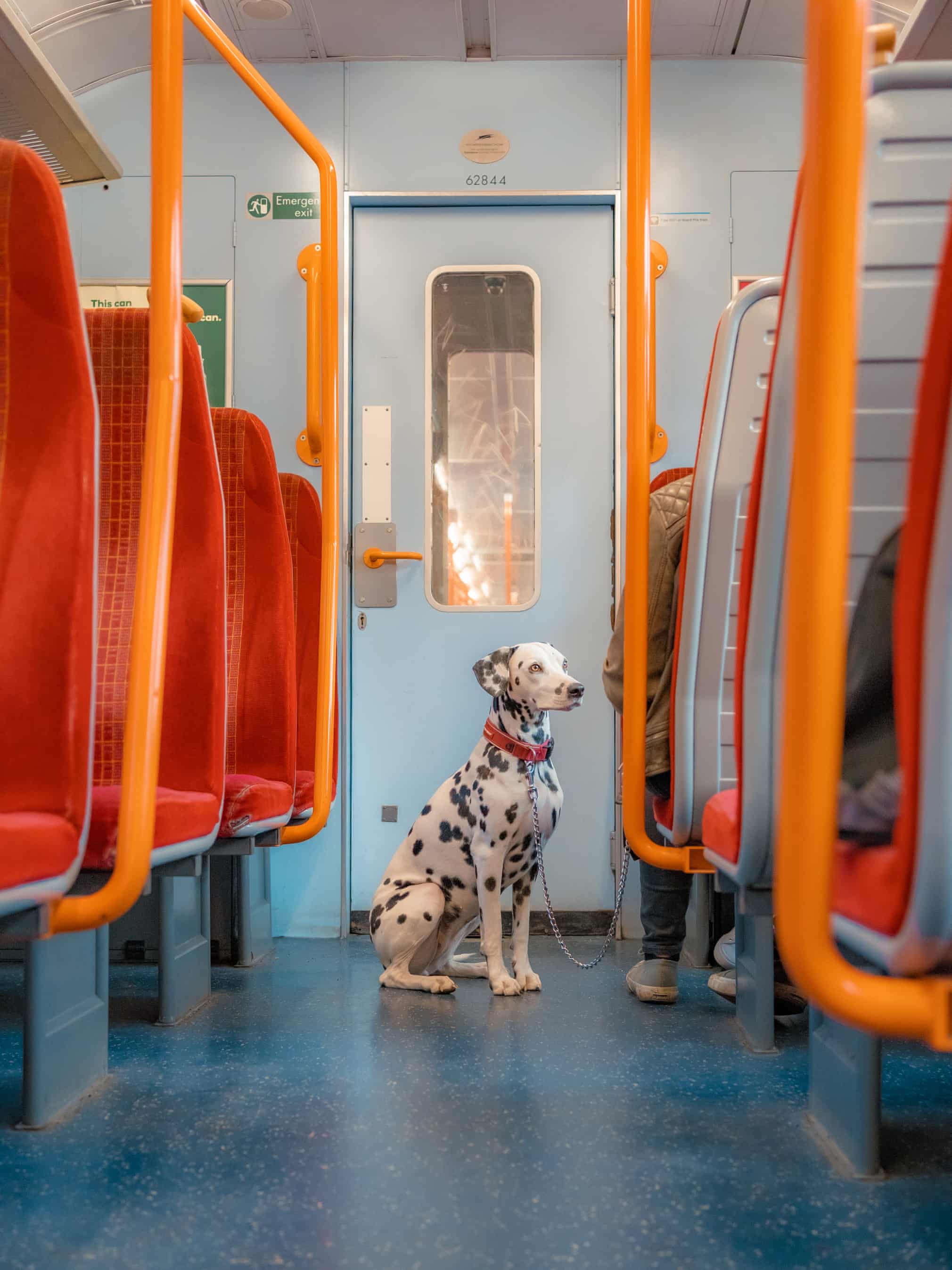
Spotted on the Train, Josh Edgoose

via
 
Share/Save/Bookmark

Wednesday, December 3, 2014

Croatian Sheepdog

The Croatian Sheepdog is the native breed of Croatia that has changed very little since its origination.
In the past, the dog was often used to drive herds of pigs to oak woods in autumn, and, in one old document, it states that this versatile breed even herded the horses from Đakovo's stables. It is both a driving and a gathering dog and, depending on whether it comes from a show or working line, its desire to work stock varies. Its approach to the flock may be closer and harder than some other breeds, but is very effective. It may grip but seldom causes any damage thereby. Nevertheless, it requires firm but sensitive handling and it is easy to overcome these aggressive tendencies by training. The breed is very intense and may bark a lot during the early stages of training, but, with experience, it will usually only bark at the right time - mostly when working in yards. This dog usually obeys only one person and an older sheepdog may take some time to switch allegiance to a new master.
The earliest written document about Croatian Sheepdogs, named "Canis pastoralis croaticus", found in the archives of the diocese of Đakovo by the "father of the breed" - veterinarian Prof Dr Stjepan Romić - is from 1374. In this document, Petar, Bishop of Đakovo, says "the dog is about 18 inches high, with medium long black curly coat, the hair on the head is short, ears are pricked or semi-pricked and it is very good for keeping flocks of all farm animals."
He also mentions that the Croats brought the dog with them while migrating from their original native land to Croatia in the 7th century. Romić also found in archive of Đakovo's diocese important information from Years 1719, 1737, 1742 and 1752. In all of these documents the description of the Croatian Sheepdog matches entirely its appearance today and in all of them the dog is named Canis pastoralis croaticus or Croatian Sheepdog. A systematic selection breeding program was started by the same Prof Romic in 1935 with dogs in the territory of Đakovo.
After 34 years of work, breed was finally recognized by FCI in 1969.

  Share/Save/Bookmark

Thursday, March 10, 2011

New dog breed recognized in Croatia

The Medji (Medjimurski mali pas or small dog from Medjimurje) has been officially recognized by Croatian cynologists as an autochtonous breed that currently numbers some 300 dogs.

A native of Cakovac area in Medjimurje County (northern Croatia), Medji is a short breed, with sturdy legs and rounded paws. It is very useful as a rat hunter, the daily Jutarnji List writes.

With the addition of the Medji, Croatia is now a home to seven autochtonous breeds, including Tornjak, Dalmatian, Croatian Shepard, Istrian Shorthaired and Coursehaired Hound as well as Posavski Hound and Posavaz Hound.

The Medji has been recognized as a separate breed after a four-year procedure. In order for it to receive the same recognition internatioanally, strict standards will have to be adhered to. To make that happen, it is necessary to precisely state the standard that defines the breed now, to establish a breeding-selection system and a significant number of representatives of this indigenous breed.

So far there are only a few Medjis, some 300, to be found in the area of Cakovac.

Croatian Times 

Share/Save/Bookmark

Wednesday, February 27, 2008

Croatian Herding Dog From Posavina


Although Croatia’s herding dog from Posavina has similar origins to all other central-European herding dogs, it has developed further along through selection processes, getting its name from the Croatian region were it originates from. This breed developed and spread, although not along the Sava River, as the Slovenes had contended at one time. According to their theory, the Posavski herding dog is a Slovenian indigenous breed, originating around the mouth of the Sava River in Slovenia, although they were soon to drop this line of argument - the first written references to this breed of dog can be found in the archives of the Croatia’s Djakovo Archdiocese, dating from 1737. Since then they have been distinguished by their hunting skills, and highly developed instincts for marking out - pointing out game (a dog which smells out game and then points until the hunter is ready to fire). Hungarians have used this breed as the corner stone in their crossbreeding efforts with their own wire-haired Viszla."
link

Friday, February 22, 2008

Istrian Herding dog -short haired


ISTRIAN HERDING DOG (SHORT HAIRED)
Companion to the Benedictines
This is a very ancient breed of dog, and is most certainly a decedent of the long legged Ancient Egyptian herding dog. In on the first Croatian books written in old glagolic script, 'Hrvoje’s missal', their is an illustration drawn in miniature, and judging from it features it is the Istrian short-hair herding dog. It is a well known and well documented fact which can be confirmed in numerous historical records, that this herding dog was bred in many of the Benedictine monasteries in the Istria region. The Istrian herding dog has a number of features which are very similar to a Porcelain herding dog from France, who was also bred by Benedictine monks."

Wednesday, February 20, 2008

The Croatian Sheepdog

Miška

The Croatian Sheepdog is a native Croatian breed and is descended from dogs which the Croats brought with them from their original native land into the region they occupy today, and which has been continually bred in Croatia, mostly in the fertile plains of Slavonia, since their arrival.
The Croatian Sheepdog is an alert, agile, keen and intelligent dog with enormous energy and with a strong need for human companionship. It is healthy, resistant to disease and not expensive to keep. It possesses a well developed herding instinct and is an excellent watchdog."
link

Tuesday, February 19, 2008

Tornjak -Croatian Shepherd Dog


"Tornjaks belong to the rare livestock protection breeds. The Tornjak is one of the very old breeds from ancient times, and it was mentioned in handwritten papers for the first time in the 9th century, in a Catholic Church's document. The breed was later mentioned in the 11th and 14th century. Tornjaks from these documents is the very same as they are today, except for the name of the breed, which was Hrvatski pas planinac, meaning Croatian dog from the mountain. The dogs in these documents was described entirely equal (function and exterior) as they are today: a protective guarding dog which keep and watch all what their humans ask from them, but highly intelligent and selected without sufficient aggression, and they are pleasant against strangers that they meet outside of their own property. It is considered that dogs of the Tornjak's type have existed in Dinaridi (region around Mountain Dinara, Croatia),as well as in the region around Vlasic (region close to the city of Bugojno, Bosnia), from the Roman times ."
link

Friday, February 15, 2008

The Dalmatian Dog


"Dalmatian physique"


Weight:~55 pounds (25 kg.)
Height:22-24 inches (50-60cm.)
Coat:Short, hard, dense
Litter size:Average is 8
Life span:10-12 years"


The Dalmatian (Croatian: Dalmatinski pas) is a breed of dog, noted for its white coat with either black or liver spots. Although other color variations do exist, any color markings other than black or liver are a disqualification in purebred Dalmatians. The famous spotted coat is unique to the Dalmatian breed; no other purebred dog breed features the distinctive spotted markings. The breed takes its name from the Croatian province of Dalmatia, where it is supposed to have originated.