Showing posts with label environment. Show all posts

Monday, June 24, 2024

Where the Wild Things Are


A growing body of research is collecting data on species threatened wildlife learning to thrive in urban spaces alongside humans. These findings also complicate the long-held idea that cities cannot be hotspots for animals and plants, and that conservation is something to do far away, in untouched places.
 
Share/Save/Bookmark

Wednesday, May 29, 2024

Temperatures are rising and the clock is ticking.


What if the solution to these problems lies, in part, in our gardens and other green spaces?
 Not that gardening can stop climate change, but what if gardens could connect us with the natural world, make us more aware of the destruction all around us?
 What if we rise up, garden by garden, park by park, balcony by balcony and do something – anything – to help a bee or a butterfly or a bird or a hedgehog?
 What would our world look like if more of us were tuned into the life systems that support us?
 
Share/Save/Bookmark

Monday, April 22, 2024

Europeans are dying from hot weather 30% more than they did two decades ago, report finds.


Photograph: Angelos Tzortzinis

  Europeans are suffering with unprecedented heat during the day and are stressed by uncomfortable warmth at night. The death rate from hot weather has risen 30% in Europe in two decades, the joint State of the Climate report from the two organisations found.
The report found that temperatures across Europe were above average for 11 months of 2023, including the warmest September since records began.
 
Share/Save/Bookmark

Tuesday, April 16, 2024

No birdsong, no water in the creek, no beating wings.


As the soundscape of the natural world began to disappear over 30 years, one man was listening and recording it all.
 Bernie Krause made his first audio clip in Sugarloaf Ridge state park, 20 minutes’ drive from his house near San Francisco.
 
Share/Save/Bookmark

Tuesday, February 13, 2024

South Asia is a major source of uncontrolled methane leaks, but large emissions have also been detected in Spain and Argentina.

 Landfills emit methane when organic waste such as food scraps, wood, card, paper and garden waste decompose in the absence of oxygen. Methane, also called natural gas, traps 86 times more heat in the atmosphere than carbon dioxide over 20 years, making it a critical target for climate action.
 Scientists have said emissions from unmanaged landfills could double by 2050 as urban populations grow, blowing the chance of avoiding climate catastrophe. A total of 1,256 methane super-emitter events occurred between January 2019 and June 2023, according to the new data. Pakistan, India and Bangladesh lead the list of nations with the most large leaks, followed by Argentina, Uzbekistan and Spain.

  Share/Save/Bookmark

Tuesday, January 9, 2024

The Raincoast Conservation Foundation celebrated a major win recently.


A conservation group has purchased the hunting rights for about a quarter of the Great Bear Rainforest in British Columbia, Canada, to prevent commercial hunting in the area.
 
Share/Save/Bookmark

Monday, December 4, 2023

Hann Bay, Senegal


John Wessels/AFP/Getty Images

 Dakar’s nine-mile-long Hann Bay used to be known as one of West Africa’s most beautiful, lined with traditional fishing villages, villas and tourist attractions. 
But for the last 20 years it has been at the centre of the city’s industrialisation, with 80% of the city’s industry nearby. Today it is one of Dakar’s most polluted areas, with canals spilling raw sewage and chemicals on to the beach and into the sea.
 
Share/Save/Bookmark

Sunday, December 3, 2023

These colors aren't for Christmas, and they aren't good news.


The Antarctic Peninsula is the part of the continent that juts out the furthest to the north, toward Argentina. It is almost midsummer there now, and the snow is beginning to bloom a festive red and green. 
 The colors indicate the presence of a type of green algae that sometimes contains a red pigment. 
In order for the algae to thrive, temperatures have to be slightly above freezing, so that snow and ice is a watery slush. The algae bloom is occurring over a wider area every year, and affecting areas further south. meaning inland. By some measures, average annual temperatures in Antarctica have risen by almost 3°C (5.4°F) since 1800, making it one of the areas most affected by climate change. 
While rising temperatures contribute to conditions that lead to algae bloom, the bloom itself is contributing to warmer temperatures. While the red and green snow may be pretty, it signals changes in the ecosystem that we may not be prepared for. 
 via
 
Share/Save/Bookmark

Monday, November 20, 2023

‘Polluter elite’ are plundering the planet to point of destruction says Oxfam


The richest 1% of humanity is responsible for more carbon emissions than the poorest 66%, with dire consequences for vulnerable communities and global efforts to tackle the climate emergency, a report says. The most comprehensive study of global climate inequality ever undertaken shows that this elite group, made up of 77 million people including billionaires, millionaires and those paid more than US$140,000 (£112,500) a year, accounted for 16% of all CO2 emissions in 2019 – enough to cause more than a million excess deaths due to heat, according to the report.
 
Share/Save/Bookmark

Tuesday, October 31, 2023

Why are we so intent on destroying the dark ?


Darkness is being stripped at a rate unprecedented in human history – the spectacle of the Milky Way in the night sky is now invisible to 80% of the world’s population (and 99% of the population of the US). There have been some efforts to reduce light pollution: in December 2021, for example, New York City passed landmark lights-out laws, while Germany, France and Spain have reduced illumination on municipal buildings. But this goes nowhere near to repairing the damage artificial light is causing. 
This matters because the dark matters. Not only does darkness offer unique physical and mental benefits to humans, it is vital to plants, mammals, birds, reptiles and insects – and not just the ones that are active at night. The trouble is, the dark scares us.  
 
Share/Save/Bookmark

Monday, July 24, 2023

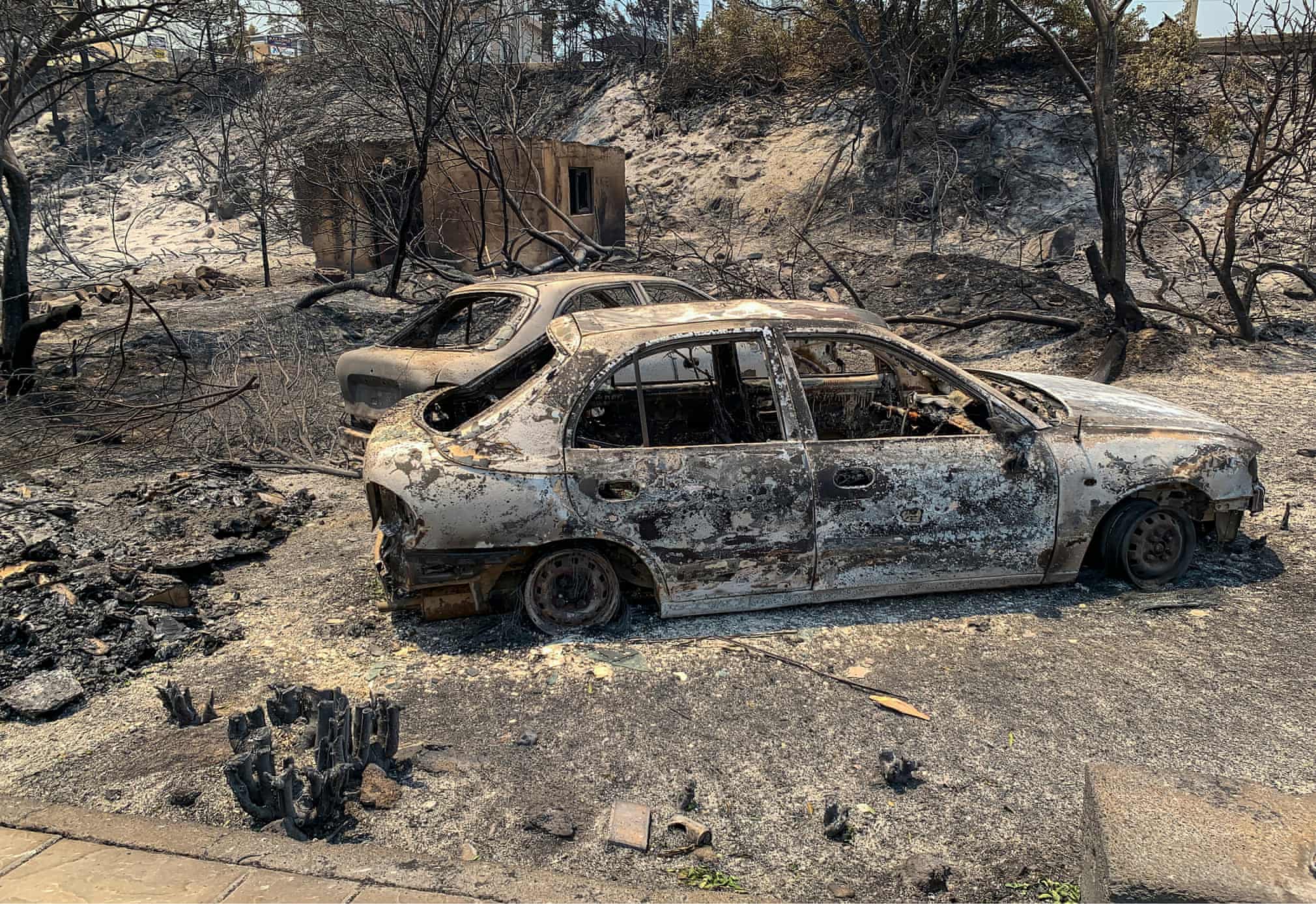
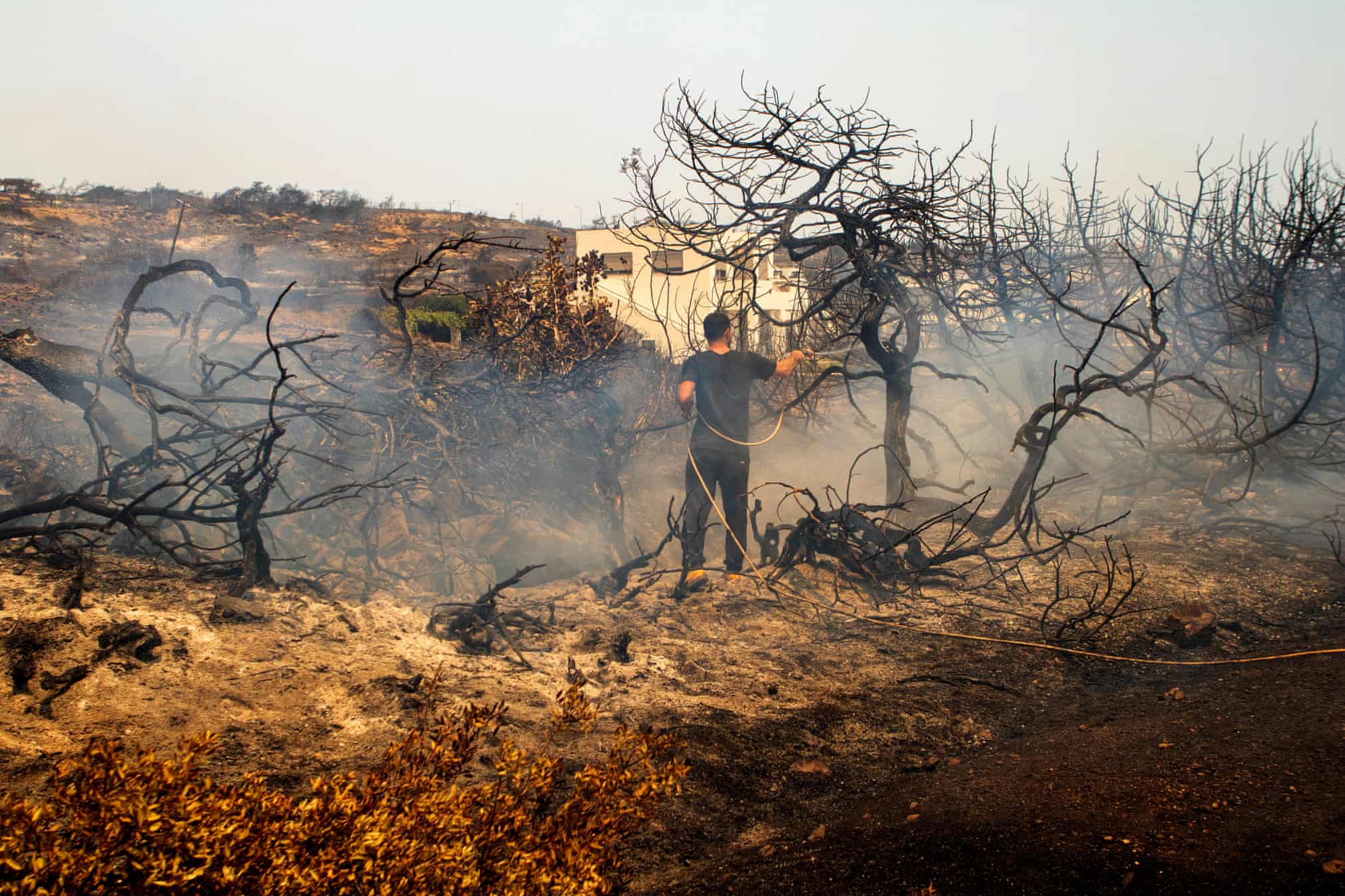
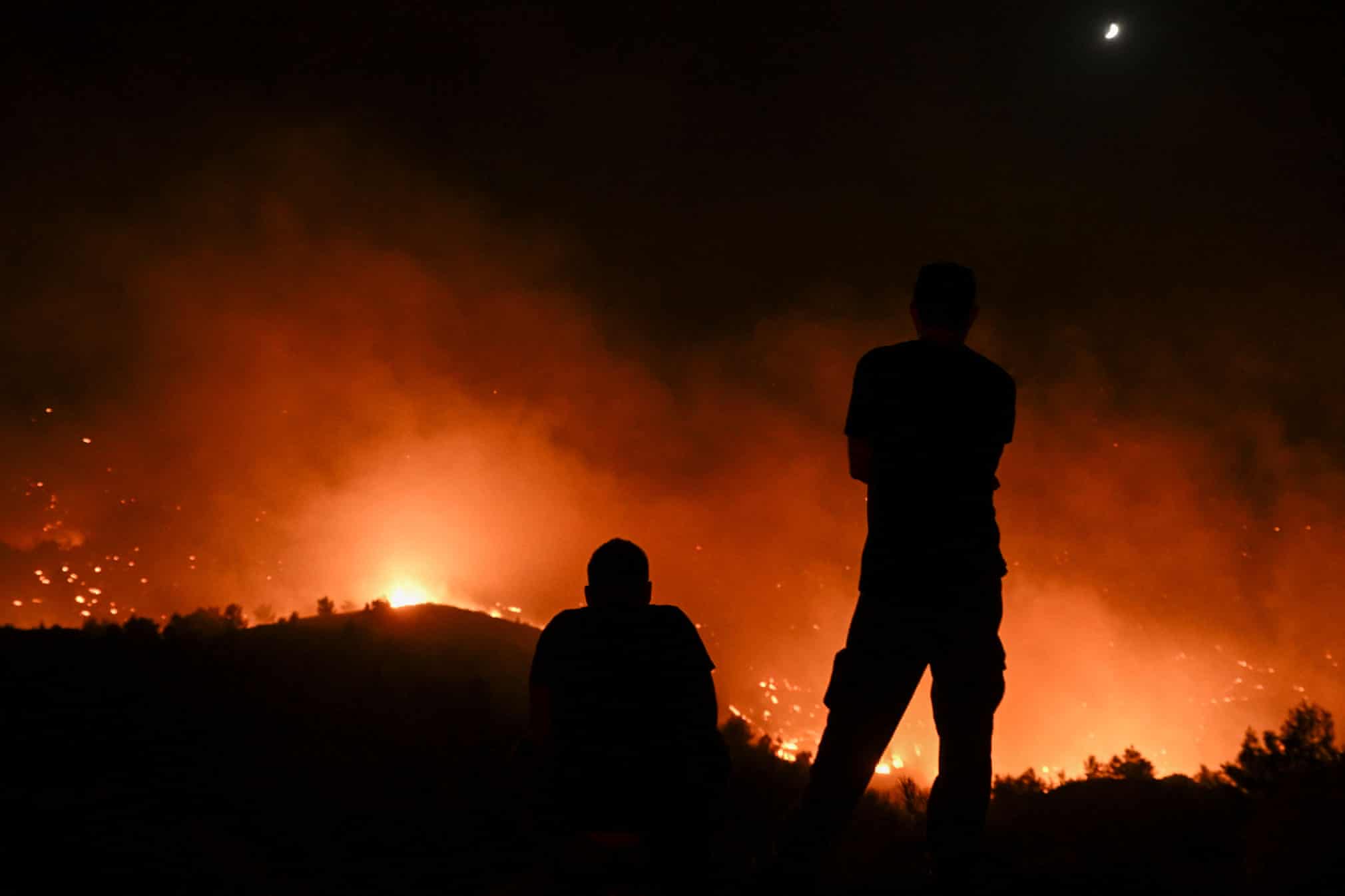
Greece wildfires


As wildfires on the Greek island of Rhodes rage for a sixth day during high temperatures, thousands of locals have been evacuated as trapped tourists try to get home. 
 
Share/Save/Bookmark

Tuesday, July 11, 2023

This is worrying news for the planet.


The beginning of July was the hottest week on record for the planet as a whole, according to the World Meteorological Organization. This year had already seen the hottest June on record, the UN body said, driven by climate change and the early stages of an El Niño weather pattern. 
 It is the latest in a series of records halfway through a year that has seen a drought in Spain and fierce heatwaves in China as well as the US. “The world just had the hottest week on record, according to preliminary data,” the WMO said in a statement, adding that temperatures were breaking records on land and in the oceans, with “potentially devastating impacts on ecosystems and the environment”. 
“We are in uncharted territory and we can expect more records to fall as El Niño develops further and these impacts will extend into 2024,” said Christopher Hewitt, WMO director of climate services.
 
Share/Save/Bookmark

Friday, July 7, 2023

Amazon deforestation down by a third in 2023


Deforestation in Brazil's Amazon fell by 33.6% in the first six months of President Luiz Inácio Lula da Silva's term compared with the same period in 2022, the government says. Its suggests the rainforest shrank by 2,649 sq km this January-June, down from 3,988 sq km in those six months last year under President Bolsonaro. The released government satellite data has not been independently verified. Lula has pledged to end deforestation, or forest clearance, by 2030. But he faces a huge challenge to achieve this target, as the area of rainforest still reported to be lost under his rule is more than three times the size of New York City. The past few years have seen an alarming rise in deforestation. 
 The Amazon rainforest is a crucial buffer in the global fight against climate change. 
 
Share/Save/Bookmark

Tuesday, July 4, 2023

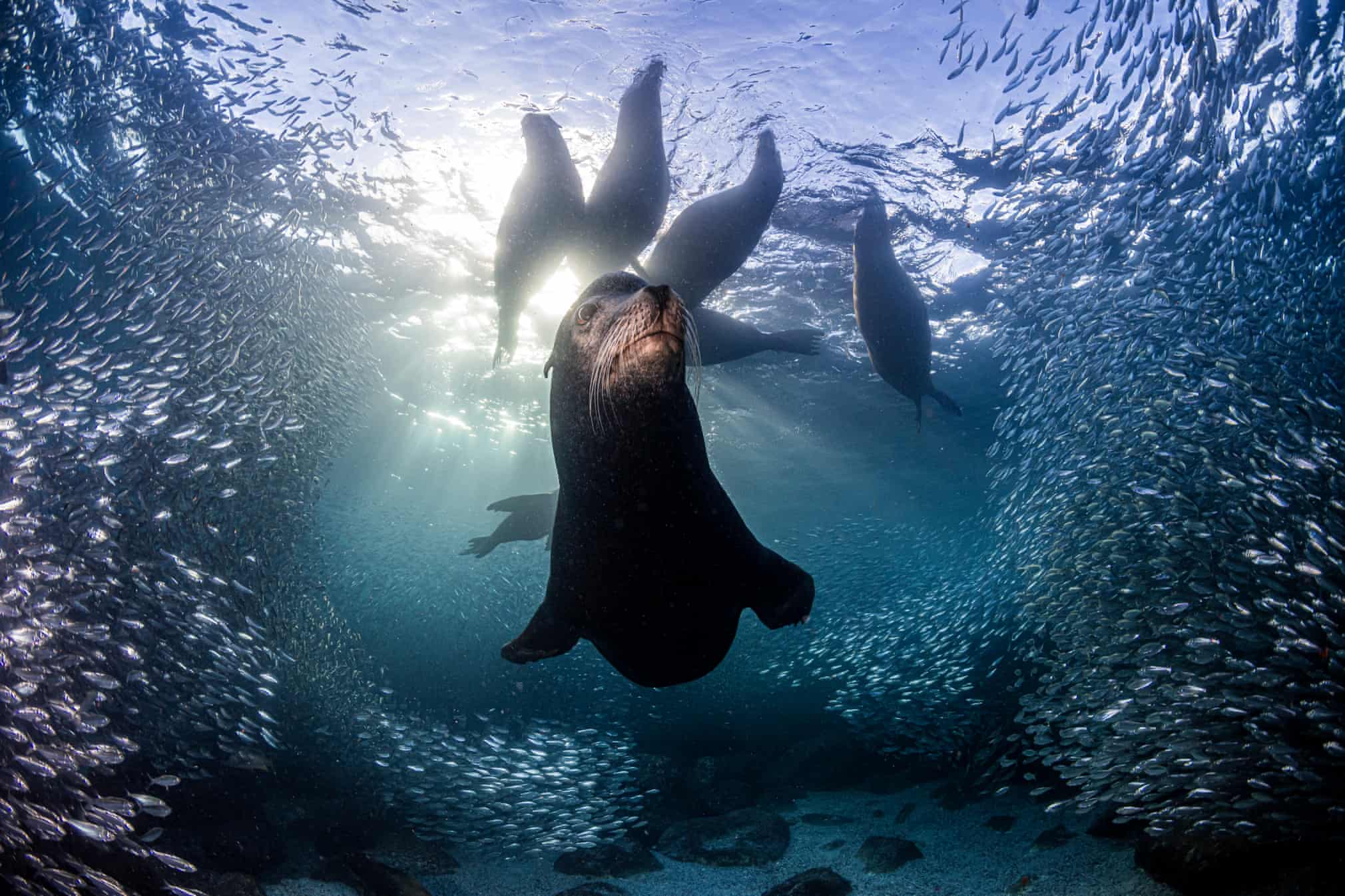
California sea lion,Simon Biddie

The winners have been announced in the third edition of the Prince Albert II of Monaco Foundation’s Environmental Photography award.
 
Share/Save/Bookmark

Thursday, June 8, 2023

Forever Chemicals


Children whose mothers are exposed to toxic PFAS “forever chemicals” during pregnancy run an increased risk of low birth weight as well as obesity and high body mass index later in life, an effect similar to prenatal exposure to tobacco, new research finds. 
 The low birth rate effects of some PFAS have been previously established, but the study tracked 1,400 kids and found higher BMIs and more incidences of obesity in those ages two to five.
 The “low birth weight-high obesity risk paradox” was previously associated with tobacco smoke exposure during fetal development. “Something similar is going on with PFAS,” said Joe Braun, a Brown University researcher and study co-author.

  Share/Save/Bookmark

Thursday, June 1, 2023

Fire, Fabrice Monteiro


Agbogbloshie, in the heart of Accra, Ghana, hosts one of the largest electronic waste dumps in Africa. 
In this area, the poorest classes of Accra have been spending years dismantling, recovering, weighing and reselling parts and metals extracted from the heaps of electronic waste. The main issue is the burning of electronic cables to extract the copper contained within them, an operation mostly done by children. 
 via

  Share/Save/Bookmark

Tuesday, May 9, 2023

Carl Sagan: a lovely and powerful new short film and automaton installation about the urgency of environmental action


In the 1980s, visionary astronomer and science educator Carl Sagan raised the alarm about climate change, destruction of our natural world, and the urgency of environmental action to protect our future. The new short film above—from UN Global Compact, AlmapBBDO, and Boiler Filmes—features clips of Sagan's speeches accompanied by a lovely tape-loop soundtrack by Amulets. 
The animal automatons were created by Argentine artist Pablo Lavezzari and are powered by the reel-to-reel tape machine.

Tuesday, March 28, 2023

African Studies, Edward Burtynsky


Particularly since 2013 when it launched its Belt and Road Initiative, China has invested billions of dollars in expanding its global presence, with many African nations as targets. 
This growth, along with international competition for access and power on the continent, has widespread economic, environmental, and governmental impacts, which Burtynsky explores through the series.
 
Share/Save/Bookmark

Monday, March 27, 2023

From living water to toxic sludge, Alecs Ongcal


The slick from sunken tanker Princess Empress has harmed livelihoods, caused health problems and done untold damage to marine life. Can Mindoro island recover?

  Share/Save/Bookmark

Monday, October 24, 2022

Let fallen leaves lie


 A municipality in the Netherlands has declared fallen autumn leaves to be worth their weight in gold – ecologically speaking.
 Eindhoven, in North Brabant, is encouraging its citizens to abandon blowers and rakes and to let fallen leaves in gardens or parks lie. Martijn van Gessel, an Eindhoven council spokesperson, said they were trying to change ideas about how public spaces should look. 
The city wants to retire leaf blowers in parks and create a warm, wet, winter leaf layer for insect life – even if it looks messier. “For a long time, people were convinced that the grass always had to be mowed, the leaves had to be collected, and everything had to look tidy,” said Van Gessel. 
“But in parks, we should let the leaves lie.” 

  Share/Save/Bookmark